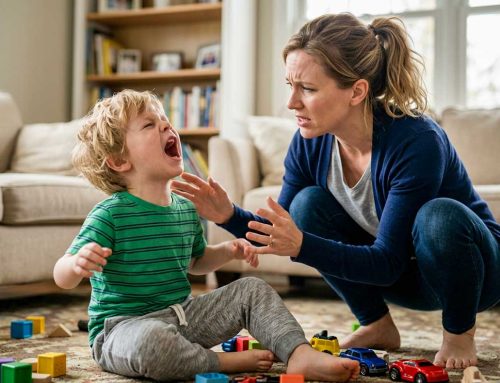
Have you ever found yourself saying the same thing to your child five, six, or even ten times before they finally listen?
You ask them to clean up. Nothing happens.
You ask again. Still nothing.
You raise your voice. Suddenly, they’re moving.
If this sounds familiar, you’re not alone. But there’s an important parenting principle behind this frustrating pattern: children learn from what consistently works. If they discover that Mom or Dad doesn’t really mean it until the yelling starts, they can unintentionally learn to ignore the first several requests.
The good news? You can teach them a different skill—one built around obedience, initiative, responsibility, and self-discipline.
Your Child Is Learning From Every Interaction
Every time your child complains until you give in, you’re teaching them something.
Every time they ask repeatedly and eventually get what they want because you’re exhausted, they’re learning that persistence pays off.
And every time you give an instruction six times before enforcing it, you’re teaching them that the first five times don’t really matter.
The lesson becomes: “I don’t have to listen until Mom gets serious.”
Eventually, your words lose their weight.
This doesn’t mean your child is manipulative or intentionally disrespectful. It means they’re learning cause and effect. As Proverbs 22:6 reminds us,
The question for parents is simple: What are we training?
Teach First-Time Listening
One powerful goal is to teach children to become first-time followers.
That doesn’t mean demanding robotic obedience or expecting perfection. It means teaching children that when a parent gives a reasonable instruction, they should respond without requiring repeated reminders.
Instead of:
“Please put your shoes away.”
“Put your shoes away.”
“I already told you to put your shoes away!”
“HOW MANY TIMES DO I HAVE TO TELL YOU?”
The goal is:
“Please put your shoes away.”
And your child learns to respond.
When your words consistently have meaning, your child learns that listening matters.
Teaching obedience isn’t simply about getting children to do what they’re told. It’s about helping them develop a heart that understands responsibility and responds appropriately.
Stop Rewarding Repeated Reminders
If your child only receives attention, rewards, or relief after you’ve repeated yourself ten times, they may learn that waiting is worthwhile.
Instead, establish clear expectations and follow through calmly.
More importantly, don’t make yelling the signal that finally gets things moving.
Your goal isn’t to become louder. Your goal is to make your words more meaningful.
Calm consistency is far more powerful than emotional escalation.
Build Initiative Into Everyday Life
The ultimate goal isn’t simply to raise children who obey when Mom or Dad tells them what to do.
It’s to raise children who notice what needs to be done and take initiative.
Bake initiative into everyday routines.
After dinner: What needs to happen next?
In the morning: What do you need to take care of before you’re ready for the day?
At night: What needs to be done before bedtime?
When your child makes a mess: What needs to happen now?
Instead of always giving them the next instruction, teach them to recognize the next responsibility themselves.
Ask, “What should you do next?”
That’s how you move from dependence to self-discipline.
Teach Responsibility, Not Just Compliance
There is a difference between doing something because Mom finally yelled and doing something because you know it’s your responsibility.
Galatians 6:5 says,
Our children need opportunities to carry appropriate responsibility for themselves.
That means sometimes they won’t receive a reward simply for doing what was expected. If they only act after repeated reminders, the lesson isn’t complete.
Instead, celebrate initiative:
“I noticed you took care of that without being reminded. That’s what responsibility looks like.”
You’re reinforcing the skill you actually want them to develop.
The Goal: Children Who Don’t Need You to Yell
As Christian parents, our goal should be bigger than getting our children to comply.
We want to raise young people who can listen, take responsibility, exercise self-control, and recognize what needs to be done without someone standing over them.
So the next time you find yourself repeating the same instruction, pause and ask:
“What skill am I training right now?”
Am I teaching my child that they don’t have to listen until I yell?
Or am I teaching them to respond the first time, take initiative, and follow through?
Start today by choosing one routine in your home and intentionally building initiative into it. Give your child the opportunity to notice, think, and act before you remind them.
Don’t just train your child to obey your voice. Train them to develop the character they’ll need when your voice isn’t there.