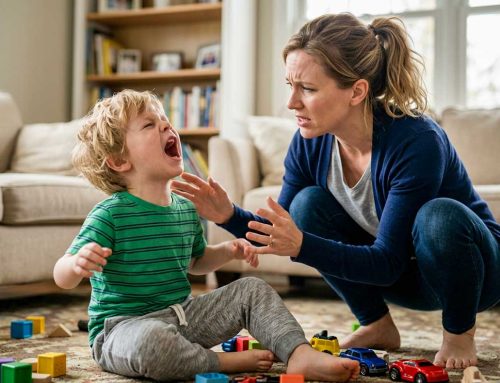
Parenting gets challenging when big emotions take over. Your child is angry, frustrated, disappointed, or overwhelmed—and suddenly they’re yelling, throwing things, or lashing out.
It’s tempting to shut down the emotion: “Stop crying.” “Calm down.” “There’s nothing to be upset about.”
But what if the goal isn’t to eliminate your child’s emotions? What if the goal is to teach them that every emotion is acceptable, but not every behavior is?

All Emotions Are Welcome, But All Behaviors Are Not
Children need to know home is a safe place to experience emotions.
Anger is okay. Sadness is okay. Fear is okay. Frustration is okay.
But a child can be angry without hitting someone. They can be frustrated without throwing something. They can be disappointed without screaming.
As parents, we can communicate a simple message:
“You are allowed to feel what you feel, but you are responsible for what you do with those feelings.”
This distinction teaches children that emotions are something they experience—not something that has to control them.
Be the Safe, Steady Parent
When your child is overwhelmed, they need a parent who remains steady.
Think of yourself as a padded wall. Your child may bounce off you emotionally, but you don’t move.
You don’t have to match their anger with anger. You don’t have to become anxious because they’re anxious. You can calmly say, “I see that you’re frustrated. It’s okay to be frustrated, but I won’t let you hit.”
Proverbs 15:1 says,
our calm response demonstrates the emotional regulation you’re trying to teach.
Help Your Child Name the Emotion
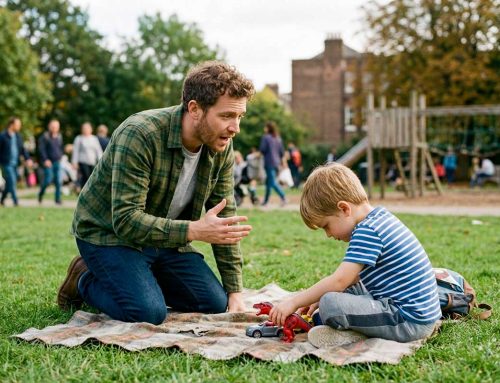
Ask your child, “How are you feeling?”
They might say, “Angry,” “sad,” or “frustrated.” Sometimes they’ll say something like, “It’s unfair!”
That’s okay. They’re learning to put words to an experience they don’t fully understand.
Help them identify it: “You’re frustrated because you didn’t get what you wanted.”
Naming emotions helps children understand what is happening inside them instead of simply reacting to it.
Teach Them to Choose Their Response
One of the most important lessons children can learn is this:
You can feel something strongly without having to act on it.
That’s fortitude.
Proverbs 25:28 says,
Ask your child:
- “What are you feeling?”
- “What do you want to do?”
- “Is that a good choice?”
- “What would be a better response?”
You’re teaching them that there is a space between what they feel and what they do. That’s where self-control grows.
Galatians 5:22–23 reminds us that self-control is part of the fruit of the Spirit.
Raise Children Who Can Choose What Is Right
Our goal isn’t simply to raise children who behave well when everything goes their way. We want to raise children who can remain self-controlled and faithful when life doesn’t.
All emotions are welcome. All behaviors are not.
The next time your child has a big emotion, don’t ask, “How do I make this feeling stop?” Instead ask, “How can I help my child understand this feeling and choose a wise response?”
That’s how we teach emotional intelligence, self-control, and the fortitude they’ll need for a lifetime of following Christ.